
Our IoT hub NEXUS is the heart of an IoT network. It connects devices, collects and processes data, ensures security and enables integration with other systems. Thanks to its ability to manage devices centrally and forward data efficiently, it plays a key role in implementing smart solutions – in smart homes, Industry 4.0, smart cities or healthcare.
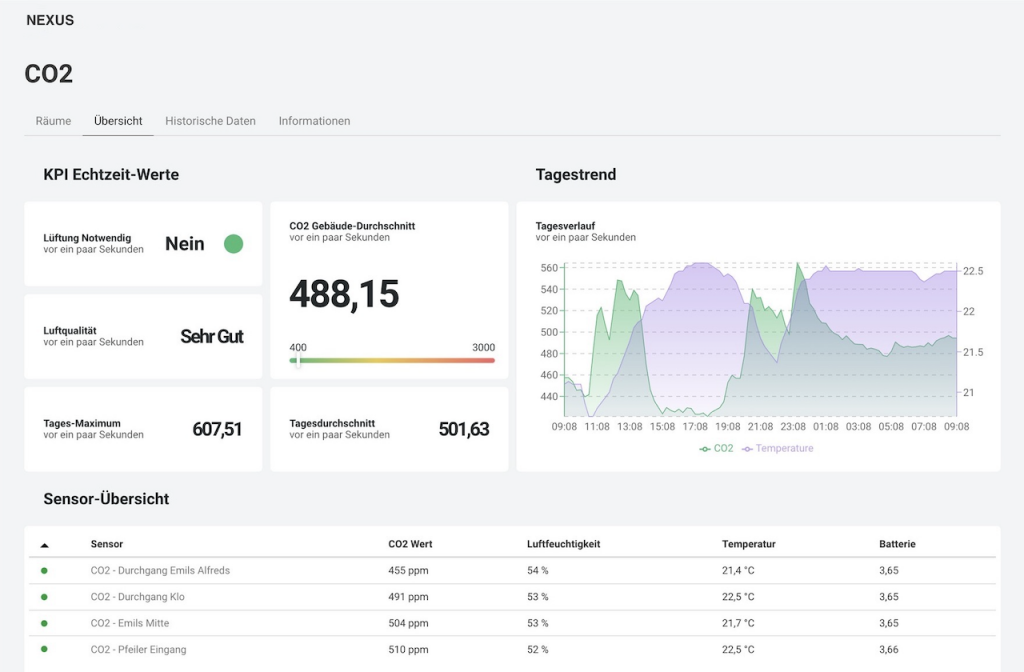
1. Central communication platform
NEXUS acts as an intermediary that enables communication between different IoT devices and systems. It supports various protocols such as MQTT, HTTP, CoAP and Zigbee to connect devices with different communication standards. This allows sensors, actuators and other devices to send and receive data even if they use different technologies.
- In a smart home system, NEXUS connects thermostats, light switches and cameras so they can communicate with each other and be controlled centrally.
2. Data collection and aggregation
NEXUS collects data from connected devices, such as temperature readings, motion data or energy consumption values, and aggregates it for further processing. The hub often performs initial pre-processing (e.g. filtering or compression) before forwarding the data to the cloud or a local application.
- In an industrial plant, NEXUS collects sensor data from machines to analyse maintenance needs in real time.
3. Device management
NEXUS provides functions for managing and monitoring connected devices, including:
- Registration and authentication: ensuring that only authorised devices can access the network.
- Monitoring: real-time monitoring of device status (e.g. online/offline, battery level).
- Remote control: sending commands to devices, e.g. updating firmware or adjusting settings.
- Fault diagnosis: detecting and fixing problems, e.g. by logging error messages.
- NEXUS can send an update to all smart lamps in a building to close a security vulnerability.
4. Data forwarding and integration
NEXUS forwards the collected data to cloud platforms (e.g. Microsoft Azure, AWS IoT, Google Cloud IoT) or local servers, where it is used for analytics, machine learning or other applications. It ensures that data is transmitted securely and in a compatible format. The hub can also be integrated with other systems (e.g. ERP or CRM software).
- In a smart city, NEXUS forwards traffic data to a cloud platform that uses it to optimise traffic light control.
5. Security and data protection
Security is a core function of NEXUS. It provides:
- Encryption: data transfers between devices and the cloud are encrypted (e.g. with TLS/SSL).
- Authentication: devices must authenticate with the hub to prevent unauthorised access.
- Access control: the hub defines which devices or users may access which data.
- Example: an IoT hub in a healthcare system ensures that patient data is only accessible to authorised devices and users.
6. Built into NEXUS: bidirectional digital twin
A digital twin is the virtual representation of a physical object, process or system that uses real-time data to simulate, analyse and optimise its behaviour, properties and performance. Sensors record operating data such as pressure, temperature or vibration, which the digital twin analyses to make precise repair predictions.
7. Edge computing (optional)
Many modern IoT hubs support edge computing, i.e. they process data locally before sending it to the cloud. This reduces latency, saves bandwidth and enables real-time decisions even if the internet connection is interrupted.
- NEXUS EDGE in a factory analyses sensor data locally to respond immediately to production deviations without waiting for a cloud response.