
Added value through smart cities
Smart IoT solutions can process the data collected by sensors, learn from it and optimise processes. This makes the smart city of the future sustainable and resource-efficient, and gives it a higher quality of life. In smart cities, intelligent solutions reduce daily commuting times, waste volumes, crime, environmental pollution and other negative factors, while improving air quality and residents’ well-being.
Key areas for IoT applications
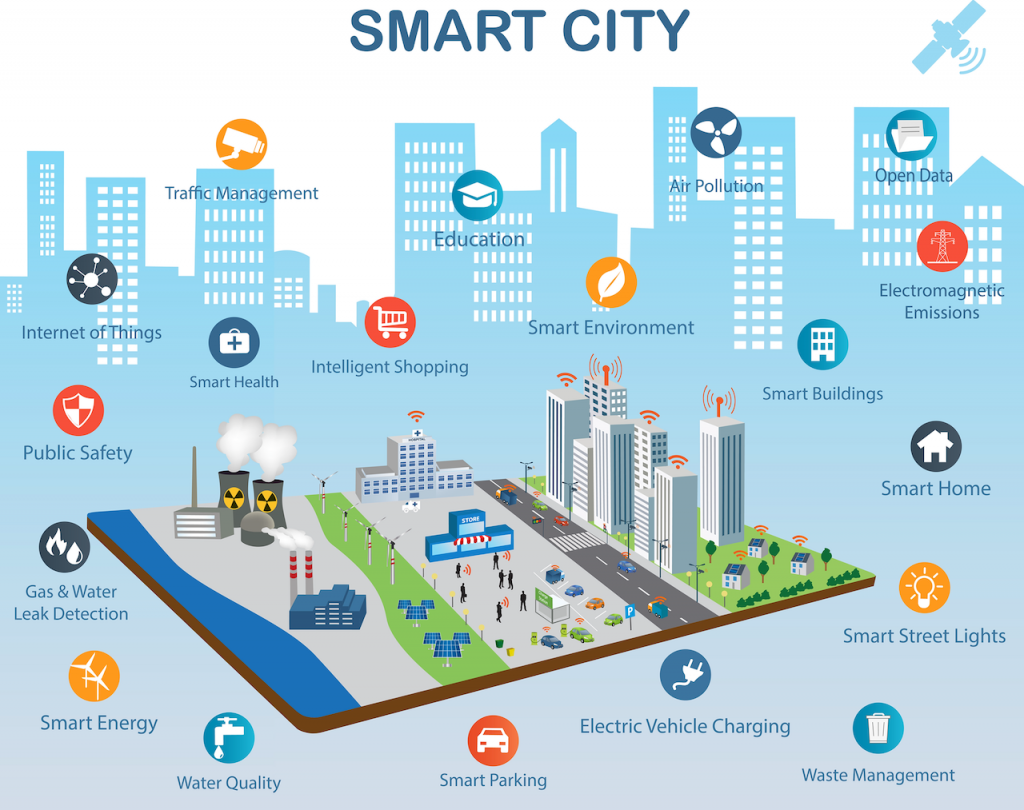
Growing urban populations pose new challenges for urban development. Modern cities already use IoT technologies to ease the pressure of population growth and enable a better quality of life. IoT applications for a smart city can be used efficiently in areas such as:
These features contribute to efficiency, sustainability and quality of life in modern cities:
- Smart street lighting: sensors and actuators automatically adjust lighting levels based on ambient data, saving energy and improving safety.
- Traffic management: real-time data from telematics systems optimises traffic flow, reduces congestion and makes public transport more efficient.
- Waste management: IoT sensors monitor the fill level of waste containers and enable needs-based emptying to save resources.
- Environmental monitoring: sensors measure air quality, water quality, noise levels and other environmental parameters to minimise health risks and promote sustainability.
- Smart buildings: automatic control of heating, lighting and security systems via IoT devices for greater energy efficiency and comfort.
- Smart metering: smart meters record electricity, water and gas consumption in real time, increasing transparency and optimising resource use.
- Public safety: technologies such as networked microphones detect gunshots or other hazards and automatically alert emergency services.
- Parking monitoring: sensors show free parking spaces and guide drivers to them, saving time and energy.
Smart City Guidance Package – guide by the EU Smart Cities Marketplace (EIP-SCC)